Islamic Dietary Law
Islamic dietary law may descend from
Jewish Dietary Law but there are significant differences that
make kosher certifications unreliable guides for Muslims.
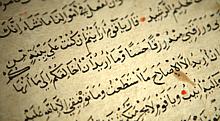
Photo © i0111
Overview
Foods (and behavior) are divided into three categories:
- Halal - lawful.
- Haram - forbidden, unlawful.
- Mashbooh, Mushtabahat - questionable or doubtful, to be
avoided where possible.
Specific Rules
This list is not exhaustive or in sufficient detail to be a complete
guide to halal foods. It is more a general guide to persons who have
found a need to understand the rules well enough to get along. For
authoritative detail see the Links section.
You need to determine the level of compliance of your guests in advance
so you will not screw up. Meats are a particular problem due to certified
halal products being difficult to find in many areas. In such cases a
vegetarian approach may be a good idea, particularly if your guests are
fairly strict in their compliance.
Alcohol
is banned, as are any foods prepared with
alcohol. For instance you can't use vanilla extract in baked goods
because it contains alcohol. The Turks, though, have either obtained
a special dispensation from Allah or they're all going straight to Hell
with the rest of us. The distilled beverage raki (similar to Greek
ouzo) is very popular, wine is used in cooking, and many Turks reserve
abstinence for Ramadan.Animals
that are vegetarian are allowed, including
cattle, sheep, goats, deer, bison, camel, wild ass and rabbit. Donkey
(domestic) is forbidden and horse is controversial (Mashbooh). In
addition, approved animals must be slaughtered in accordance with
Islamic law (Zabihah). This must be done by a Muslim while invoking the
name of Allah. Slaughter must by by cutting all blood vessels in the
neck. There is debate as to whether animals slaughtered by Christians
and Jews (People of the Book) can be eaten. The answer tends to "No"
(and how can you say the guy who actually did the job wasn't a Hindu,
Pagan, or Shamanist?). There is also a problem with bogus halal
certification of packaged meats. The best solution is probably to
slaughter your own goat, carefully following the instructions.Animal Products
from non halal animals are
forbidden. Animal shortenings (lard, tallow), gelatin and many other
animal extracts used in food processing are forbidden unless the halal
and Zabihah status of the source are known - usually impossible. Blood
and products made from blood are forbidden, but liver and spleen
(which contain blood) are permitted.Specifically Forbidden
are pigs, donkeys, mules, dogs, cats,
monkeys, elephant, mouse, rat, wild animals and all predators (animals
with fangs). Any animal that has died except by Zabihah slaughter is
forbidden except fish that have died by removal from water or by a
blow.Birds
that hunt with talons (hawks, eagles, etc.) and prey
on animals or birds are forbidden. Birds that eat seeds and vegetables
are permitted (chicken, duck pigeon sparrow, etc.). Birds that eat
some forbidden items (chickens eat insects, etc.) are permitted
provided such things are not a major part of their diet.Insects:
Locusts are permitted, all others
forbidden.Pigs
may not be eaten nor any foods derived from pigs, but
going beyond Jewish dietary laws Islam forbids having anything whatever
to do with pigs. A Muslim is only allowed to sell pork if in an infidel
land and if grave hardship would be caused by not doing so. Even then
the money must be kept separate from other money and all profit must be
given to Muslim charities. Pig leather and other non-food products are
also banned. For more on this see our
Pig - Prohibitions page.
Fish:
This is an area of disagreement. Some schools
follow the same strict rules as Kashrut (Jewish dietary law). Others
permit all fish but not shellfish. A few classify shrimp and prawns
as "fish", while still others consider all seafood permitted. In any
case, fish that have died in the water are forbidden. Fish killed by
removal from water or by a blow are permitted (if they are a permitted
fish according to the school of thought to which you subscribe).Shellfish
are forbidden by some schools, accepted
along with all seafoods by others.Rodents
and other Pests
are all forbidden,
including mouse, hedgehog and rat, but rabbit is permitted (rabbit is
scientifically not quite a rodent).Reptiles and Amphibians
are all forbidden.Cheese:
Here we have controversy. Some schools reject
all rennet coagulated cheese because the Zabihah status of the animal
is unknown. Others say rennet is not life because blood does not flow
thorough it so it doesn't matter. Some say rennet is OK so long as it
doesn't come from a pig (redundant, rennet never comes from pigs).
Cheeses coagulated with acid (cottage, farmer's, etc.) are generally
permitted as are those coagulated using vegetable enzymes.Whey
is a byproduct of cheese making and products containing
it are subject to the same controversy as with cheese.Fruits and Vegetables
can be eaten, but must be inspected to
assure they contain no bugs.Grains
are all permitted, provided they have not been
prepared using animal fats or other forbidden ingredients, and are
bug free.Vinegar
is permitted even though it can only be made
from alcohol (wine, beer, etc.). Muslims make some pretty good wine
vinegars but they label them "raisin vinegar" or some similar
euphemism. They use a continuous process so Allah can't accuse them
of making wine and throwing them into the flames of Hell.
Halal Certification
Unlike kosher certification, halal certification is still pretty
sparse in North America, and there is considerable dispute among
certifying organizations, particularly in regard to meats. Fraud is
fairly common.
Links
This list does not include all sources used to prepare this page but it
but those listed are particularly informative.
islam 080106 - www.clovegarden.com
©Andrew Grygus - agryg@clovegarden.com - Photos on this
page not otherwise credited are © cg1 -
Linking to and non-commercial use of this page permitted