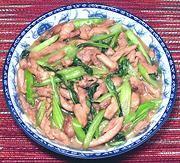
Serving
(click to enlarge)

Chicken Yu Choy Stir-fry
China

Serves:
Effort:
Sched:
DoAhead:
2 main  
**
30 min  
Prep
This very tasty stir-fry is basically Yu Choy Stir-fry made with marinated chicken to convert it to a main dish. We also have Pork Yu Choy Stir-fry, and other choys could also be used with some change in flavor and texture.


12
1
1
12
----
1/2
1
1/4
1
1/2
----
2
oz
T
T
oz
---
T
T
c
T
t
---
T
Chicken (1)
Soy Sauce
Corn Starch
Yu Choy (2)
-- Sauce
Soy Sauce
Oyster Sauce
Stock
Rice Wine (2)
Salt
--------
Oil
    Prep   (20 min)
  1. Cut CHICKEN into thin strips about 1/8 inch by 1/2 inch by 2 inches long. Massage together with Soy Sauce and Cornstarch, then set aside to marinate for 1/2 hour or more.
  2. Rinse Yu Choy and cut it whichever way you like. Stems do not need to be held separate unless they are quite large but I usually do anyway.
  3. Mix All Sauce items.
  4. RUN   (10 min)
  5. In a wok or spacious sauté pan heat Oil and stir in Chicken. Fry stirring over high flame until it has lost its raw color. The cornstarch will start to stick to the pan, be careful it does not burn because it will become part of the sauce.
  6. Stir in Yu Choy Stems (if separate) and fry stirring about 1-1/2 minutes, then stir in leaves until coated with oil.
  7. Stir in Sauce Mix and bring to a boil. Scrape material stuck to the pan into the sauce. Simmer covered, turning frequently, until Yu Choy stems are crisp tender, about 3 minutes..
  8. Serve hot with plenty of steamed long grain rice.
NOTES:
  1. Chicken:   Weight is for skinless, boneless chicken. I always use thigh meat because it is moist and flavorful compared to the cardboard chicken breasts produced in North America.
  2. Yu Choy:   This is an edible version of the plant that produces the seeds canola oil is made from. It is now widely grown in North America and readily available in most markets serving an East or Southeast Asian community. For details see my Yu Choy page. You can use other forms of choy as alternatives, but but in most cases give the stems more of a lead over the leaves in cooking. The flavor will be a bit different and in most cases less sweet. For details see my Cabbage Greens page.
  3. Rice Wine: Use a good drinkable Chinese rice wine. The cooking versions are heavily salted and not that good to start with. If you don't have the rice wine use sake or a dry sherry.
  4. U.S. measure: t=teaspoon, T=Tablespoon, c=cup, qt=quart, oz=ounce, #=pound, cl=clove in=inch
cmc_chkyuch1 100505 var
©Andrew Grygus - ajg@aaxnet.com - Linking and non-commercial use permitted