Giant Mud Skipper Goby
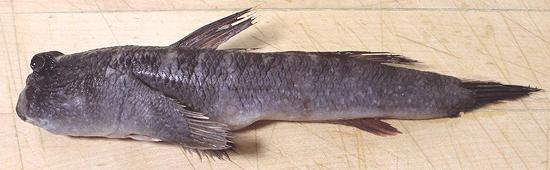 [Cá Thòi Lòi (Viet); Belacac, Gabus lawut (Malaysia);
Belodoc, Blodoc (Indonesia); Bia (Philippines);
Periophthalmodon schlosseri of family Gobiidae]
[Cá Thòi Lòi (Viet); Belacac, Gabus lawut (Malaysia);
Belodoc, Blodoc (Indonesia); Bia (Philippines);
Periophthalmodon schlosseri of family Gobiidae]
Native to the shallow coastal regions of Southeast Asia, including
Indonesia, Philippines, and northern Australia. It is an amphibious fish
and can be found in salt and brackish waters, in the tidal zone of fresh
water, and especially on mud flats. It spends much of its time out of the
water searching for worms, insects, and small crabs. It can grow to about
10-1/2 inches long and is subject to a minor fishery. IUCN Red Listed LC
(Least Concern).
More on Goby Family.
This fish is surprisingly meaty and easy to deal with on the plate
compared to many other very small fish. The flesh will be eaten skin-on as
the skin does not have a strong or "off" taste and is too thin to remove.
Buying:
This fish can sometimes be found frozen, packaged on
foam trays in some large Asian markets, originating from Vietnam. The photo
specimen came in a package of five at 2024 US $3.79. The largest was 8.2
inches total length and weighed 3.3 ounces.
Method I Used
- Cut off the whole head with kitchen shears. This will also take the
pectoral and pelvic fins. There's nothing to eat up there.
- Scale the fish. The scales are large and very thin, but scrape off fairly
easily with moderate flying around. They are hard to see so check with a
thumbnail to see if you got them all.
- Split the belly and scrape out the innards.
- Simmer the body for about 4 minutes.
- Place on a plate and spoon on some sauce. I use just lemon juice, white
wine and salt, but any thin Asian dipping sauce will be fine.
- Pull out the fins, top and bottom, leaving the tail on. This will make
eating much more pleasant.
- Pick the flesh off the bones with pointy chop sticks. The flesh will come
off the bones easily and cleanly.
- When eating, you will encounter a few almost invisibly thin rib bones at
the body cavity end. You can't find them to remove them, so you'll just have
to take them from your mouth as you tongue finds them. Even Victorian
etiquette allowed removing fish bones from the mouth (but absolutely nothing
else).
sf_gobymsz 250630 - www.clovegarden.com
©Andrew Grygus - agryg@clovegarden.com - Photos
on this page not otherwise credited © cg1
- Linking to and non-commercial use of this page permitted